

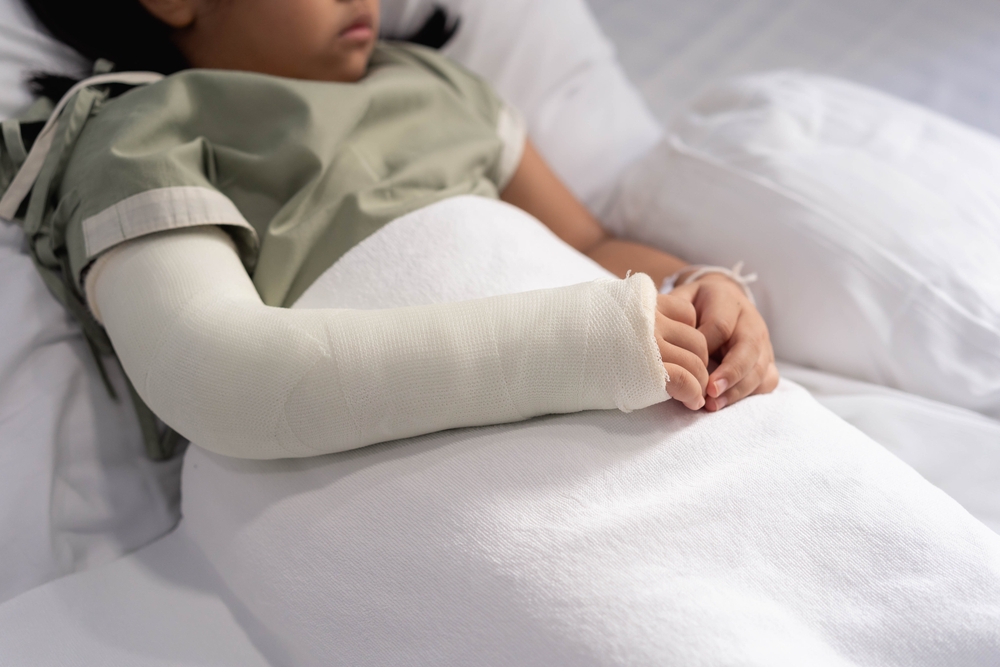
When your child suffers a broken bone, the experience is naturally stressful. You trust that a visit to a New Jersey emergency room or a pediatric orthopedic specialist will be the beginning of the healing process. In most cases, a doctor applies a cast or a brace, provides instructions for home care, and your child begins the road to recovery.
But what happens when the very treatment intended to stabilize a fracture becomes the source of a life-altering injury? At Fronzuto Law Group, we have built our reputation on handling complex cases of pediatric malpractice, and we have seen how a seemingly routine medical procedure like casting can spiral into a catastrophic emergency known as Compartment Syndrome. If a medical team fails to recognize the warning signs of this condition, your child could face permanent nerve damage, muscle loss, or even the amputation of a limb..
What is Pediatric Compartment Syndrome?
To understand why this condition is so dangerous, it is helpful to visualize how the human body is structured. Our muscles, nerves, and blood vessels are grouped together in areas called compartments. Each compartment is surrounded by a tough, inelastic tissue called fascia.
Because fascia does not stretch, any swelling or bleeding within that compartment increases the internal pressure. If a cast or brace is applied too tightly, or if a doctor fails to account for the natural swelling that follows a pediatric fracture, that pressure can skyrocket. When the pressure inside the compartment exceeds the pressure of the blood flowing to the area, the tissues are starved of oxygen. In a child’s rapidly developing body, this lack of blood flow can cause permanent tissue death in as little as four to six hours.
Why Children are at Higher Risk for Casting Complications
As New Jersey pediatric malpractice attorneys, we often find that children are particularly vulnerable to compartment syndrome for several reasons. First, children may not have the vocabulary to describe the specific type of burning or tingling pain associated with nerve ischemia. A young child might simply cry inconsolably, which a distracted medical professional might dismiss as normal post-fracture discomfort.
Second, the anatomy of a child is different. Their bones are more flexible, but their growth plates are sensitive. When a cast is applied to a pediatric patient, the medical team must be hyper-vigilant. If we look at the standard of care for New Jersey child bone injury lawyers, it is clear that doctors must anticipate significant swelling in the first 24 to 48 hours after an injury. Failing to bivalve a cast (cutting it down both sides to allow for expansion) when there is a high risk of swelling is often a critical error.
The Five Ps: Warning Signs of Pediatric Orthopedic Malpractice in NJ
In the medical community, there are five classic signs of compartment syndrome, often referred to as the Five Ps. If you noticed these signs in your child and the medical staff failed to act, you may have grounds for a cast complications lawsuit.
- Pain out of Proportion: This is the most significant early indicator. If your child’s pain is not relieved by elevation or medication, or if the pain seems far worse than what is expected for a simple break, it is a major red flag.
- Pallor: The skin on the fingers or toes below the cast may look pale, blue, or dusky, indicating a lack of blood flow.
- Paresthesia: This refers to a pins and needles sensation or numbness. In children, this may manifest as an inability to feel you touching their toes or fingers.
- Pulselessness: This is a late and often catastrophic sign. It means the pressure has completely cut off the arterial blood supply.
- Paralysis: An inability to move the fingers or toes is a sign of advanced nerve and muscle damage.
If your child exhibited these symptoms and a physician or nurse told you to wait and see or simply prescribed stronger pain medication, they may have missed the critical window for an emergency fasciotomy (a surgical procedure where the fascia is cut to relieve pressure).
The Devastating Impact of a Failure to Diagnose
A compartment syndrome failure to diagnose is not just a temporary setback. It is a catastrophic medical error that changes a child's future. When pressure is not relieved, the muscles eventually undergo a process called necrosis, where the tissue actually dies. This can lead to Volkmann’s Ischemic Contracture, a permanent deformity where the fingers or toes become claw-like and useless.
We understand that the physical toll is only one part of the story. A child who was once an athlete or a musician may suddenly face a lifetime of physical therapy, multiple corrective surgeries, and the psychological trauma of a permanent disability. At Fronzuto Law Group, we work with life care planners and medical experts to ensure that any legal action accounts for the decades of specialized care your child may require.
Proving Medical Negligence in New Jersey Cast Injury Cases
To successfully pursue a claim, we must prove that the healthcare provider deviated from the accepted standard of medical care. In the context of pediatric compartment syndrome, this often involves investigating the following:
- Improper Casting Technique: Was the cast applied while the limb was still actively swelling without leaving room for expansion?
- Inadequate Monitoring: Did the nursing staff fail to perform frequent neurovascular checks on the child’s extremities?
- Failure to Escalate: If a nurse noticed a lack of pulse or extreme pain, did they wait too long to contact the attending orthopedic surgeon?
- Discharge Errors: Was your child sent home from the ER too soon without proper instructions on how to monitor for compartment syndrome?
New Jersey law is strict regarding medical malpractice. Navigating the requirements, such as the Affidavit of Merit, requires an attorney who specializes in these complex pediatric cases. We focus on uncovering the truth through hospital logs, pressure monitor readings, and expert testimony to hold negligent facilities accountable.
Why Choose Fronzuto Law Group for Your Child’s Case?
We know that no amount of money can undo the pain your child has suffered. However, a successful legal claim can provide the financial resources necessary to give your child the best possible quality of life. Whether it is adaptive technology, specialized home care, or advanced prosthetics, we fight to secure your child’s future.
Our firm is led by Ernest P. Fronzuto, who has dedicated his career to representing families in high-stakes pediatric malpractice and catastrophic injury cases. We limit our caseload so that we can provide the intensive, personalized attention that these complex medical issues require. When we take on a case involving pediatric compartment syndrome, we are not just looking for a quick settlement; we are building a comprehensive narrative of what went wrong and how it could have been prevented.
Contact Fronzuto Law Group Today for a Consultation About Your Case
If your child suffered permanent nerve damage, muscle loss, or limb impairment following the application of a cast or brace, you deserve answers. The medical team may try to claim that the injury was an unavoidable complication of the original fracture, but often, the truth is that a failure to monitor or a delay in surgery is to blame.
We invite you to reach out to our team of New Jersey pediatric malpractice attorneys. We will review the details of your child’s medical records, consult with leading orthopedic experts, and help you understand your legal options. You do not have to face this journey alone.
Call us at 973-435-4551 or contact us through our website to schedule a free, confidential consultation. We are ready to listen to your story and fight for the justice your child deserves.
Disclaimer: The articles on this blog are for informative purposes only and are no substitute for legal advice or an attorney-client relationship. If you are seeking legal advice, please contact our law firm directly.